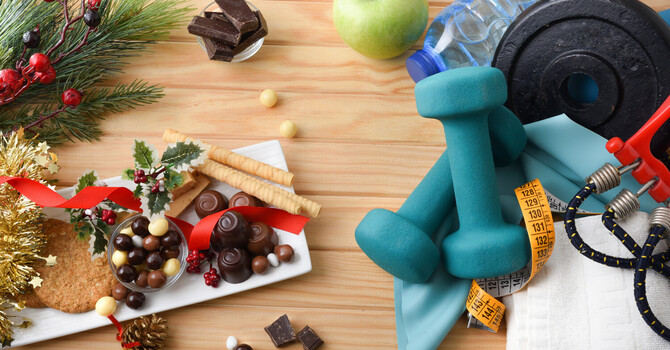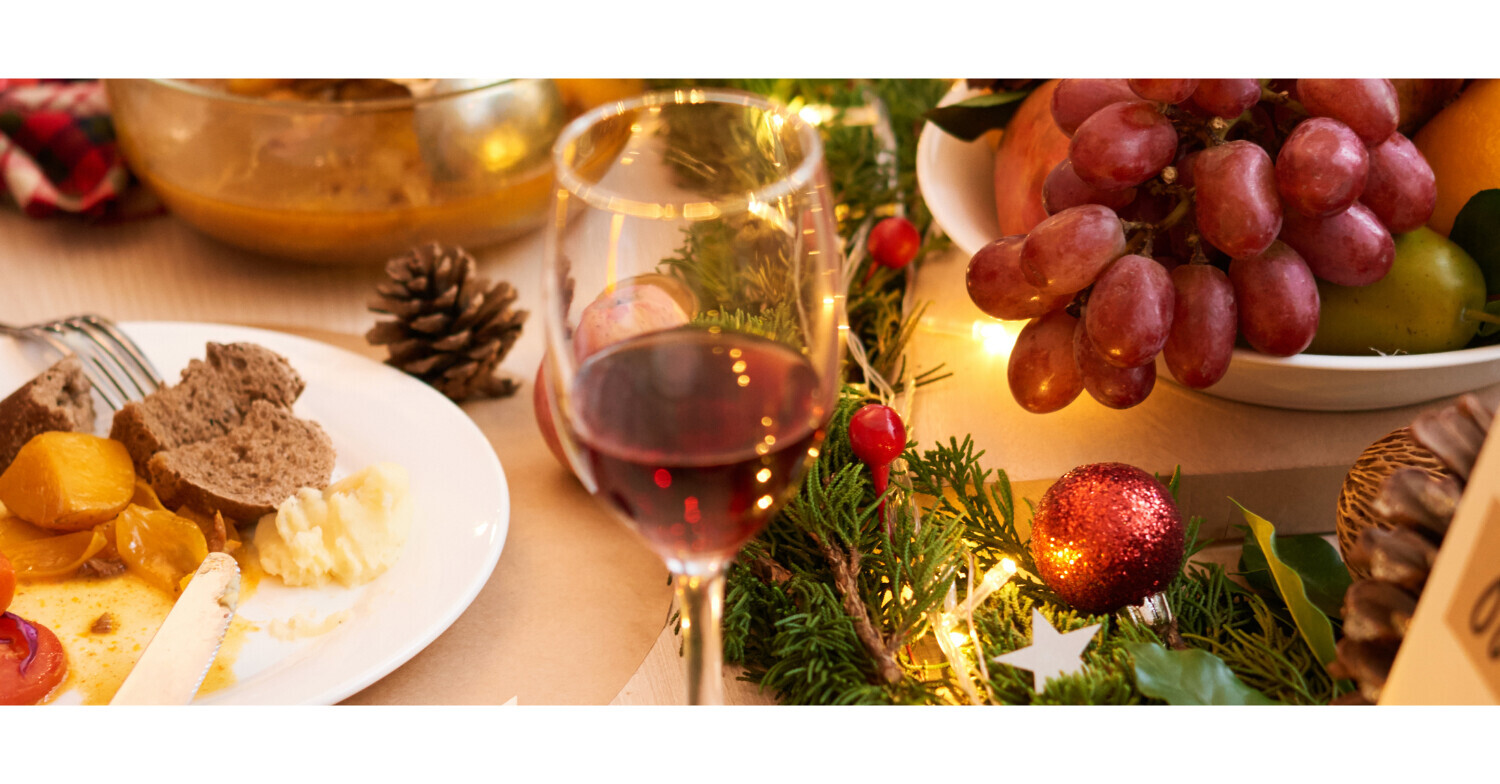
Holiday parties create a specific kind of food environment that is almost perfectly designed to undermine the choices you'd normally make easily. The food is appealing, it's abundant, it's presented attractively, it's accompanied by social pressure and emotional association, and it's consumed in a context where your normal decision-making framework doesn't apply.
The standard advice — "everything in moderation," "make healthy choices," "use willpower" — doesn't account for any of this. It assumes that the same person who makes good food decisions in a normal context will continue to make them in a context specifically engineered to override those decisions. This is not how human nutrition psychology works.
The strategies that actually work for holiday eating are not about stronger willpower. They're about reducing the number of decisions that require it.
Eat Before You Go
This is the highest-leverage single strategy for holiday eating, and it's the one most people don't use because it seems unnecessary — "I'll eat at the party."
The problem with eating at the party as your primary nourishment strategy is that it puts you in front of a buffet table when you're hungry. Hunger dramatically amplifies the appeal of calorie-dense, low-nutrient foods — the exact foods that dominate holiday party spreads. Decision-making quality under hunger is consistently worse than decision-making quality under satiety, and the party environment adds social distraction, alcohol, and emotional triggers on top of the hunger.
Eating a protein-forward meal or snack before you arrive — not a full dinner that leaves you uncomfortable, but enough to eliminate hunger as a variable — removes the urgency from the buffet table. You're there to socialize. The food is available if something genuinely appeals to you. But you're not making decisions about what to eat from a position of physiological need amplified by an environment designed to override your judgment.
A Greek yogurt with some nuts, a couple of hard-boiled eggs, some cottage cheese with vegetables — something that takes five minutes and provides enough protein to produce satiety for two to three hours — is the difference between arriving as a person making deliberate choices and arriving as a person who is hungry in front of a buffet table at a holiday party.
Navigate the Buffet Table With a Simple Framework
When you're at the buffet table, the decision fatigue of holiday party eating is almost entirely about the number of choices. The more options available, the more cognitive effort each decision requires, and the more the cumulative effort depletes the decision-making capacity you brought to the party.
A simple framework reduces this: proteins and vegetables first, everything else optionally.
Scan the buffet before you plate anything. Identify the protein options — meat, seafood, cheese — and the vegetable options. These become the foundation of your plate. Once you have a plate that's majority protein and vegetables, anything else that genuinely appeals to you can be added with full intention — not because it was in front of you and you were depleted, but because you actually want it.
This framework does not require avoiding anything. It requires one decision — protein and vegetables first — rather than thirty individual decisions about thirty individual items. One decision replaces thirty. That is a significant reduction in the willpower demand of the buffet table.
The other buffet strategy worth knowing: position yourself away from the food when you're socializing. Research on food consumption in social environments consistently shows that proximity to food is one of the strongest predictors of how much is consumed — stronger than hunger, preference, or intention. If you're standing next to the shrimp cocktail while you're catching up with someone, you will eat significantly more shrimp cocktail than if the conversation happens across the room. Distance from the food requires no willpower. It just requires where you stand.
The Potluck Opportunity
Potlucks are actually the best holiday food situation you'll encounter — because you control one item on the table. Use this.
Bring something you genuinely love that also happens to be nutritionally solid. Not a sad-looking vegetable tray that signals sacrifice — something that looks appealing, tastes good, and that you'll actually eat. A protein-forward dish, a beautiful grain salad, something with good flavor and real ingredients that you'd make any time of year.
You now have one guaranteed excellent choice at the table. You will eat the thing you brought because you like it. You'll likely have more of it than anything else. And the fact that it's yours — that you made it, that people ask about it — makes it socially easy in a way that other healthy choices at potlucks sometimes aren't.
Fizzy Drinks, Alcohol, and Feeling Included
Alcohol is a significant variable in holiday health — not primarily because of calories, though those matter, but because of the cascade of downstream effects. Poor sleep after drinking. Lowered inhibition around food choices in the hours following consumption. The inflammatory response that follows even moderate alcohol intake. The metabolic swing the next day that drives cravings toward carbohydrate-dense comfort foods.
Not drinking at holiday parties is a completely valid choice that has become significantly more socially acceptable than it was even five years ago. But the practical reality for most people is that having something in your hand in a social situation reduces the social awkwardness of not drinking more effectively than any explanation.
Sparkling water with lime, a non-alcoholic ginger beer, a mocktail if the host is offering them, sparkling water in a wine glass — these are all options that keep something in your hand, keep you feeling included in the toasting and the social ritual of drinks, and remove the conversation about why you're not drinking. Nobody asks why you're drinking sparkling water. The conversation happens with the empty hand.
If you do drink, the strategy that works best is consistent: start with sparkling water, alternate alcoholic drinks with non-alcoholic, and set a number before you arrive rather than deciding in real time in an environment where the decision-making conditions are compromised.
The Bigger Picture
Holiday party eating is a two-month pattern, not a single event. One party where you ate everything in front of you changes nothing meaningful. A pattern of skipping the eat-before-you-go step, filling up at buffet tables because you're hungry, and drinking more than intended because you didn't have a plan — across eight or ten or twelve events — accumulates into the metabolic swing and the January deficit that the restart is supposed to fix.
The strategies above are not about perfection. They're about reducing the decision load so that the choices you'd make anyway, in a normal environment, are still available to you in an environment that's specifically challenging.
Your nervous system is managing a significant load in November and December. The metabolic swings from inconsistent eating add to that load — blood sugar spikes and crashes drive cortisol, and cortisol is already elevated from everything else the season brings. Eating in ways that keep your blood sugar more stable is not just about weight management. It's about having the energy, the mood, and the nervous system capacity to actually enjoy the parts of the season that matter.
Dr. Carla Freeman, DC | Breathe Chiropractic | Phoenix AZ | (602) 254-2454