If someone told you that the most important core exercise you could do requires no equipment, takes five minutes, and is something your body is already designed to do automatically — you'd probably be skeptical. Core training is supposed to be hard. It's supposed to involve planks and dead bugs, and the burning sensation in your midsection that signals your muscles are working.
But the foundation of core stability is not a plank. It's a breath.
More specifically, it's the correct function of the diaphragm — the dome-shaped respiratory muscle that sits at the top of the trunk, separates the chest cavity from the abdominal cavity, and serves as the roof of the core pressure management system. When the diaphragm functions correctly, it is the initiating event in a cascade of deep muscle activation that provides spinal stability for every movement you make. When it doesn't — which is the case for most people living under chronic stress — the entire deep core stabilization system is compromised from the top down.
Understanding why this happens and how to restore correct diaphragmatic function is one of the highest-leverage interventions available for anyone dealing with back pain, core weakness, or the recurring breakdown that follows training despite adequate visible strength.
The Diaphragm's Role in Core Stability
The core stabilization system — the inner unit — functions as a pressurized canister. The four walls of this canister are: the roof (the diaphragm), the floor (the pelvic floor), the front and sides (the transverse abdominis), and the back (the multifidus).
For this system to generate the intra-abdominal pressure that stabilizes the spine during movement, all four walls must work together in a coordinated sequence. The diaphragm initiates this sequence.
Here's the mechanism in practical terms: when you breathe in correctly — using the diaphragm — the dome descends downward into the abdominal cavity. This descent increases intra-abdominal pressure, which causes the abdominal wall to expand outward in all directions (including to the sides and back, not just the front). The pelvic floor responds by eccentrically lengthening — providing counter-pressure from below. The transverse abdominis reflexively co-contracts to manage the increased pressure.
The result is a natural pressurization of the core canister that provides spinal stability as a byproduct of normal breathing — without conscious effort, without specific core exercises, and in a way that is perfectly timed to every movement the body makes.
This is what the deep core stabilization system is supposed to do. And it's built on the foundation of correct diaphragmatic breathing.
What Most People Are Actually Doing When They Breathe
Most adults breathe with their chest rather than their diaphragm. Watch the average person breathe at rest and you'll see the chest rising, the shoulders elevating slightly, and minimal movement at the belly. This is thoracic breathing — the breathing pattern of a nervous system in a mild stress response.
Thoracic breathing uses the accessory respiratory muscles — the scalenes, the sternocleidomastoid, the upper trapezius — rather than the diaphragm as the primary engine of respiration. These muscles are designed for emergency use — the rapid, high-volume breathing of a physical threat response. Using them habitually as the primary breathing mechanism creates sustained tension in the neck and upper back, keeps the diaphragm from descending fully, and — critically — fails to pressurize the core canister.
When the diaphragm doesn't descend on inhalation, the cascade of deep stabilizer activation it should trigger doesn't occur. The transverse abdominis doesn't get the pressurization cue. The pelvic floor doesn't engage in its counter-pressure role. The core canister is not pressurized. And the spine moves without the intra-abdominal pressure management system that should be providing its stability.
This is not an isolated problem. It is chronic in stressed populations — and the chronic stress load that most of our patients carry is precisely the condition under which chest breathing becomes habitual.
The Stress Connection
The nervous system's stress response and the breathing pattern are bidirectionally linked. When the sympathetic nervous system is activated, breathing automatically shifts toward the chest — shallower, faster, more thoracic. When breathing is shallow and thoracic, the nervous system receives afferent signals that maintain sympathetic activation. The two systems reinforce each other.
This is why the breathing pattern in chronically stressed people is self-perpetuating. The stress keeps the breathing thoracic, and the thoracic breathing maintains the physiological signals of stress. The diaphragm — which is also the primary respiratory driver of vagal tone, the parasympathetic activation that counterbalances the stress response — is underused. And with it, the deep core stabilization system that depends on its correct function.
Restoring diaphragmatic breathing is therefore simultaneously a core rehabilitation intervention and a nervous system regulation intervention. When your body stops treating every day like an emergency, the breathing pattern shifts naturally toward the diaphragm — and with it, the deep core pressurization that protects the spine during every movement.
How to Restore Diaphragmatic Breathing
The following sequence is the starting point for restoring correct diaphragmatic function. It is simple, requires no equipment, and can be done in five minutes.
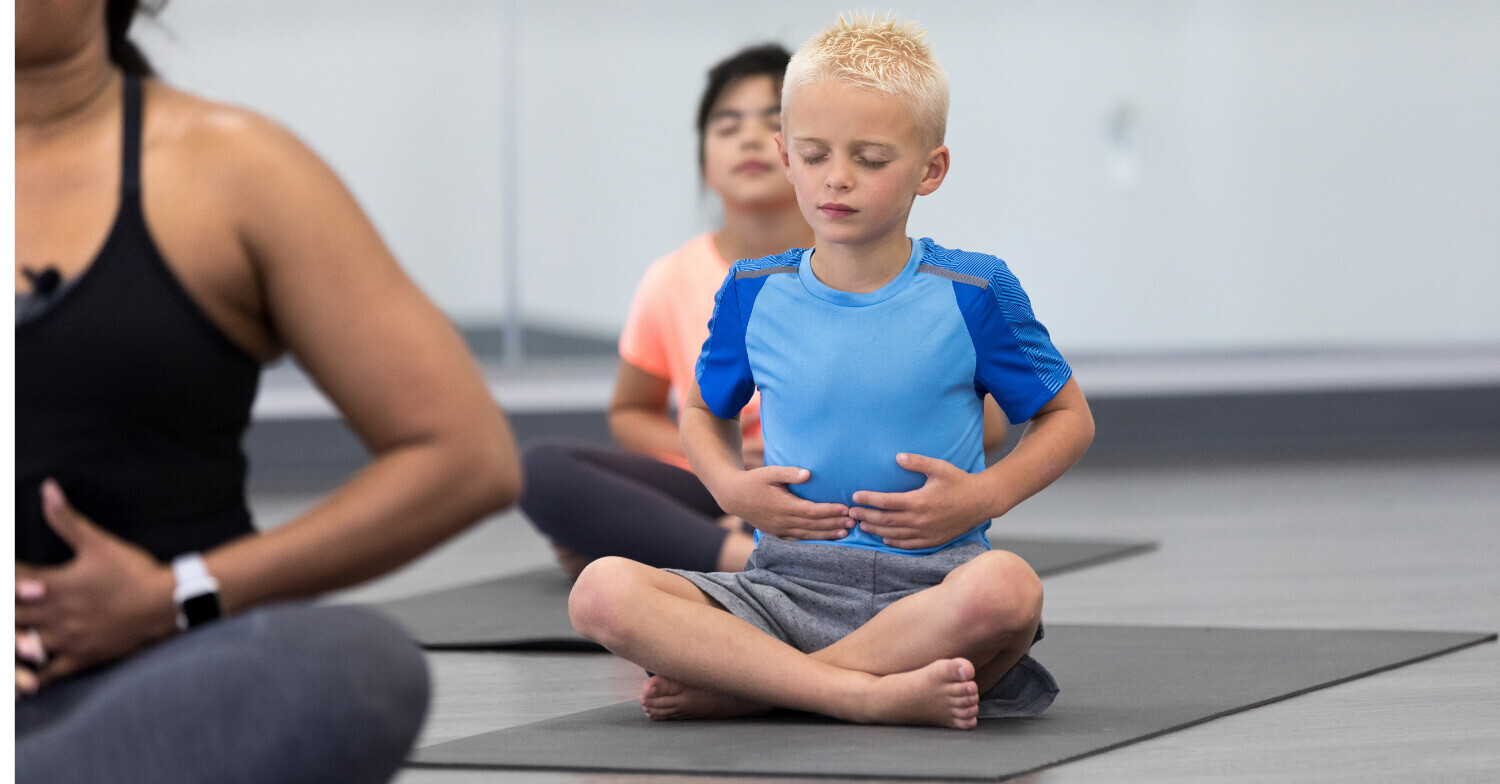
Position: Lie on your back with knees bent and feet flat on the floor. Place one hand on your chest and one hand on your lower abdomen, just below your navel.
The breath: Inhale slowly through your nose. As you breathe in, the lower hand should rise as your belly expands — and the chest hand should remain relatively still. If your chest is rising more than your belly, the diaphragm is not descending fully.
The expansion: As you develop comfort with diaphragmatic breathing in this position, pay attention to the lateral and posterior expansion — the breath expanding into the sides of the ribcage and into the back, not just pushing the belly forward. Full 360-degree expansion of the ribcage indicates complete diaphragmatic descent.
The exhale: Allow the exhale to be passive — do not forcefully pull the belly in. Let the diaphragm rise naturally and the abdominal wall return to its resting position.
Progression: Once you can consistently feel diaphragmatic breathing at rest in this position, practice it in sitting, then standing. Then begin to use it as the breathing pattern during low-load core exercises — coordinating the inhale with loading positions and the exhale with effort. Eventually, the goal is for this pattern to be your default breathing pattern during all activities, including training.
How Chiropractic Supports Diaphragmatic Function
The diaphragm is innervated primarily by the phrenic nerve, which originates from the cervical spinal cord at C3, C4, and C5. Thoracic spinal restriction also directly affects ribcage mobility — the expansion of the ribcage during diaphragmatic breathing depends on the ability of the thoracic vertebrae and costovertebral joints to move freely.
Gentle chiropractic care (breathechiro.com/services/gentle-chiropractic) that addresses cervical joint restriction and thoracic mobility simultaneously supports the neurological and mechanical conditions for full diaphragmatic function. Many patients notice improved breathing depth and ease following thoracic adjustment — a direct mechanical benefit of the restored ribcage mobility that chiropractic care provides.
Acupuncture at Breathe complements this work through its direct effect on the autonomic nervous system — supporting the parasympathetic shift that allows the chest-breathing pattern of sympathetic activation to relax toward the diaphragmatic breathing pattern of parasympathetic regulation.
If you've been working on your core and your back pain persists, the breath is worth assessing before adding more exercises to the program. Book a first visit (breathechiro.com/pages/contact) at Breathe Chiropractic in Phoenix and let's look at the full picture.
Dr. Carla Freeman, DC | Breathe Chiropractic | Phoenix AZ | (602) 254-2454