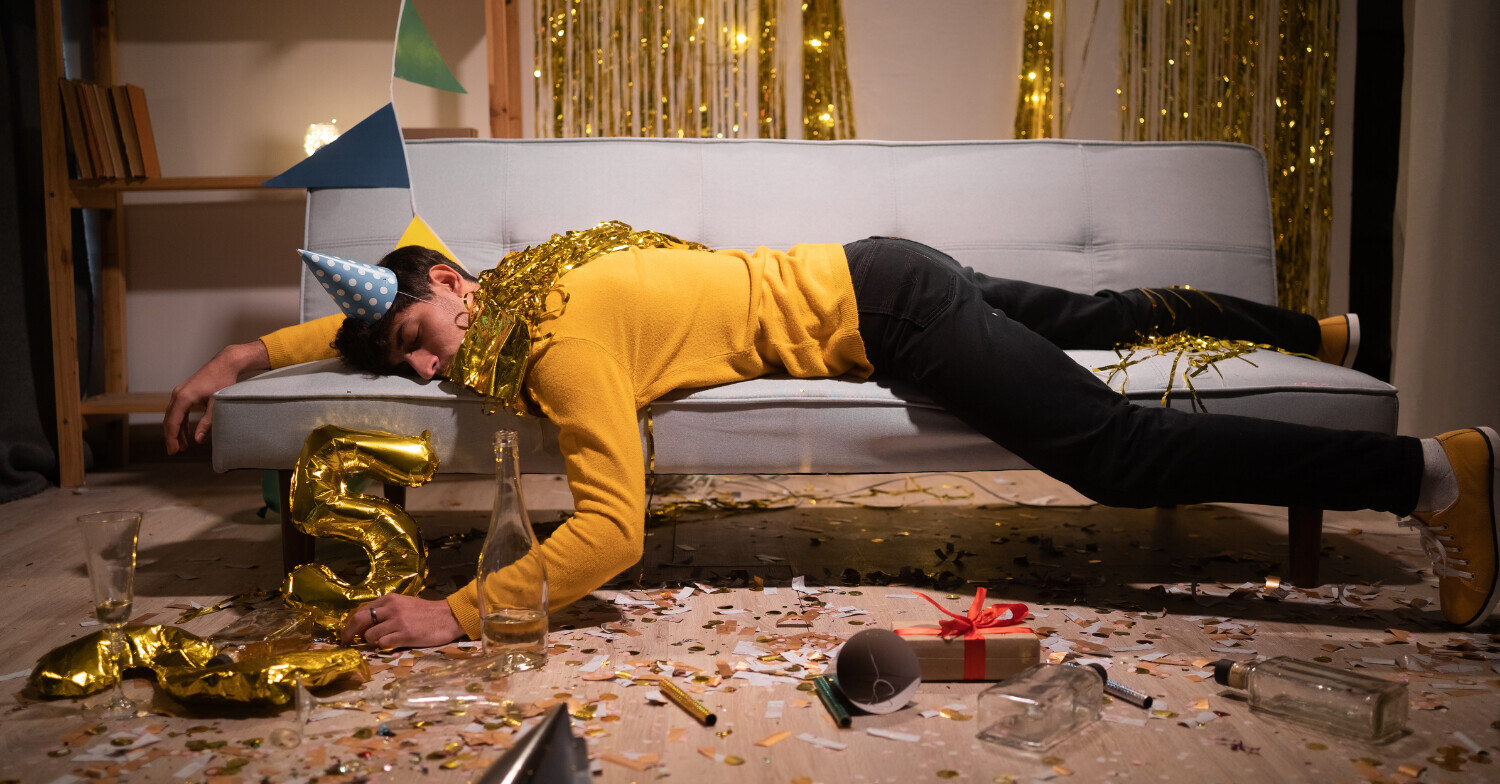
Sleep is the first thing that goes in the holiday season and the last thing that gets attention. The late nights of social events, the travel disrupting time zones and familiar environments, the children and grandchildren who don't share your sleep schedule, the financial and family stress that runs in the background of every late December night — these are the forces that make holiday sleep some of the worst of the year for many people.
And yet sleep is doing more work in November and December than in almost any other period. It's the primary mechanism through which your nervous system processes stress, regulates mood, consolidates the experiences of the season, and prepares for the demands of the next day. When it's consistently disrupted, everything else gets harder — the patience in difficult family conversations, the energy to enjoy the things you planned to enjoy, the emotional regulation that determines whether the holidays feel meaningful or overwhelming.
The goal here is not to sleep like a monk through the season. It's to protect enough sleep, consistently enough, that the cumulative deficit doesn't accumulate into the depleted, exhausted state that makes January feel like recovery rather than a new beginning.
Identify Your Non-Negotiable Sleep Floor
The single most useful concept for holiday sleep is the non-negotiable floor — the minimum sleep you need to function reasonably the next day, identified in advance.
For most adults this is somewhere between six and seven hours. It may be less if you sleep efficiently, more if you don't. The number is personal and you probably know it intuitively — it's the amount below which the next day is noticeably harder in ways you can feel.
Once you know your floor, the holiday sleep strategy becomes much simpler: protect the floor, and let everything above it be flexible.
This reframe removes the perfectionism from holiday sleep management. You're not trying to maintain your ideal eight hours through every night of the season. You're protecting the minimum below which the next day becomes significantly compromised — and letting the events, the late nights, the early mornings of travel, and the children who wake you at 5am on Christmas morning exist above that floor without guilt or anxiety.
This approach also makes recovery sleep explicit. If Tuesday night was a late event that brought you in at midnight, protect Wednesday's sleep rather than letting the deficit accumulate through the week. One night of short sleep is physiologically inconsequential. A week of progressively shorter nights builds a cumulative deficit that takes significantly longer to recover from.
The Travel Sleep Kit
Holiday travel is one of the most reliable sleep disruptions of the season — unfamiliar environments, changed time zones, shared sleeping spaces, and the physiological arousal of travel itself all conspire against sleep quality. A small preparation significantly improves this.
Your own pillow case (familiar scent is a genuine sleep aid — your own scent on familiar fabric signals your nervous system that the environment is safe). A consistent pre-sleep routine that works in any environment — something you do every night regardless of where you are that signals the nervous system to begin downregulating. Magnesium glycinate taken 30-60 minutes before sleep, which supports the nervous system's transition into sleep regardless of environment. An eye mask and ear plugs if you're sharing a space with a light sleeper or in an unfamiliar environment with ambient noise.
None of this fully compensates for the disruption of travel. But it meaningfully reduces the gap between sleep quality at home and sleep quality on the road.
The Alcohol-Sleep Trade-Off Worth Understanding
The post on metabolic stress covers this in detail, but it's worth restating here in the specific context of sleep: alcohol is a sleep disruptor, not a sleep aid, even though it feels like the opposite.
The relaxation that follows alcohol consumption is real. The drowsiness that makes falling asleep easier is real. What is also real is the rebound activation that occurs four to six hours later as alcohol is metabolized — which disrupts the second half of the night, the sleep period when the most restorative slow-wave and REM sleep occur.
The practical implication for holiday sleep: if you're going to drink at an evening event, finishing earlier in the evening gives more time for alcohol metabolism before sleep. Two drinks at 6pm produces meaningfully better sleep than two drinks at 11pm, even if the total consumption is identical.
This is not a reason to avoid drinking. It's information that allows you to make the trade-off consciously rather than discovering the sleep disruption after the fact.
Protecting Sleep Anchor Points
Even in the most disrupted holiday schedule, two sleep anchor points are worth protecting: your wake time and the first and last nights of any travel or event sequence.
Wake time as the circadian anchor: your circadian rhythm — the internal clock that regulates sleep, alertness, and dozens of hormonal cycles — is primarily set by morning light and consistent wake time. The holiday schedule will disrupt your bedtime on many nights. Protecting your wake time — within an hour of your usual time even on late nights and weekends — keeps the circadian anchor relatively stable and makes falling asleep on the subsequent nights easier. Sleeping in to compensate for a late night feels helpful but actually shifts your circadian rhythm toward later, making the following night's sleep harder to achieve on your normal schedule.
First and last nights of travel: arrive at your destination with your sleep kit. Protect the first night of travel sleep as well as possible — it sets the sleep trajectory for the rest of the trip. And protect the last night before returning home, because the sleep on the homeward travel night determines how you function for the first few days back in your regular schedule.
The Chiropractic Sleep Connection
Upper cervical joint restriction — which accumulates with the postural demands of travel, the stress-driven muscle tension of the season, and the sleep positions of unfamiliar beds — directly affects the brainstem structures that regulate sleep-wake cycling. Many patients notice improved sleep quality following upper cervical chiropractic care, often as a secondary effect they didn't anticipate when they came in for neck pain or headaches.
Keeping your chiropractic appointments through the holiday season maintains the cervical joint mechanics that support sleep regulation — and the parasympathetic nervous system activation that the adjustment produces directly supports the nervous system's ability to downregulate into sleep.
If sleep has been difficult and you haven't been keeping your appointments consistently, book in through December rather than waiting until January. The sleep you protect in November and December pays dividends throughout the season — and determines what your January baseline looks like.
[Book Your Appointments Through December]
Dr. Carla Freeman, DC | Breathe Chiropractic | Phoenix AZ | (602) 254-2454