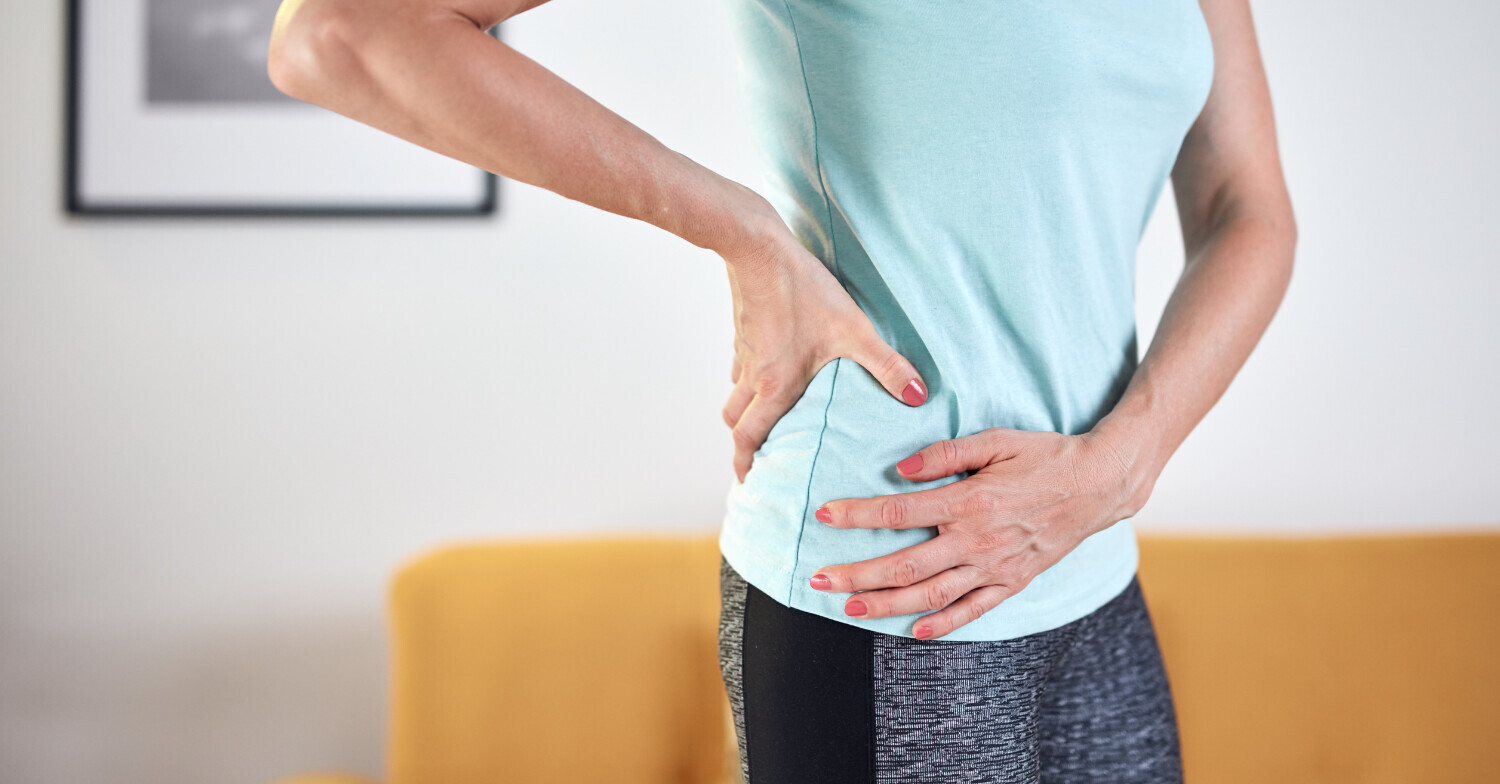
Most people who come to Breathe with low back pain have been told to work on their core. They've added planks, bridges, and bird-dogs. Some of them have been remarkably consistent — months of core work without the lasting relief they were told to expect. And when they describe their program, there's a consistent gap.
They're training their spine. They're not training their hips. And for many of them, the hips are where the problem actually lives.
The mistake — and it's a common one, even in well-designed rehabilitation programs — is treating the hip as separate from the core. It isn't. The hip stabilizers are core muscles in every functional sense of the term, because they control the position of the pelvis during movement and directly determine the load placed on the lumbar spine and sacroiliac joints. When they fail, the low back absorbs the consequences.
Why the Hip Is Part of the Core
The lumbopelvic hip complex is the technical term for what we call the core — and "hip" is not incidental to that name. The pelvis is the structural center of the complex, connecting the lumbar spine above to the hip joints on either side and the lower extremities below. Everything that happens at the hip directly affects what happens at the lumbar spine, and vice versa.
The hip stabilizers — particularly the gluteus medius, the gluteus minimus, and the deep hip external rotators (the piriformis, obturator internus and externus, gemelli, and quadratus femoris) — control the position of the femoral head in the acetabulum during movement and manage the medial-lateral stability of the pelvis during single-leg activities like walking, running, stair climbing, and every sport.
When these muscles are functioning well, the pelvis remains level during movement, the sacroiliac joints are loaded symmetrically, and the lumbar spine operates from a stable base. When they're weak, inhibited, or poorly coordinated, the pelvis drops on the unloaded side during movement (the Trendelenburg pattern), the sacroiliac joint on the stance side is loaded asymmetrically, and the lumbar spine is required to compensate for the pelvic instability — a demand it is not designed to meet sustainably.
The Specific Patterns That Drive Back Pain
Gluteus medius weakness and SI joint pain: The gluteus medius is the primary lateral stabilizer of the pelvis during single-leg stance — which is every step you take when walking or running. When the gluteus medius doesn't hold the pelvis level, the pelvis drops toward the swing leg, creating a shear force at the sacroiliac joint on the stance side. Repeat this pattern thousands of times per day across years of walking, and the accumulated asymmetrical loading of the sacroiliac joint is a primary driver of the SI joint pain and sacral dysfunction that underlies a significant portion of low back pain presentations.
Hip external rotator weakness and lumbar rotation strain: The deep hip external rotators control femoral rotation during movement. When they're insufficient, the femur internally rotates during weight-bearing activities — creating a rotational force at the pelvis and lumbar spine that the spinal musculature must resist. In people who run, squat, or perform any repetitive lower body movement, this rotational demand accumulates into lumbar strain, facet joint irritation, and the pattern of back pain that worsens with activity and improves with rest.
Tight hip flexors and lumbar hyperlordosis: The psoas major connects the lumbar vertebrae directly to the femur. When it's chronically shortened — which it is in everyone who sits for extended periods and in everyone whose nervous system is running a chronic stress response — it pulls the lumbar spine into excessive lordosis and the pelvis into anterior tilt. This postural position increases the compressive load on the lumbar facet joints and the shear force on the intervertebral discs. Low back pain that is consistently worse after sitting and first thing in the morning (when the psoas has been in a shortened position for hours) often has a primary hip flexor component.
Inhibited glutes and lumbar overload: The gluteus maximus is the primary hip extensor and one of the most powerful muscles in the body. It is also consistently inhibited in people with low back pain — often through a combination of the arthrogenic inhibition reflex from painful lumbar structures and the neurological inhibition from lumbar joint dysfunction described in our neuromuscular efficiency series. When the gluteus maximus isn't functioning as the primary hip extensor, the hamstrings and lumbar erectors compensate — creating a loading pattern that concentrates excessive force in the lumbar spine during every extension-pattern movement.
Why Spinal Core Exercises Alone Don't Fix This
Planks, dead bugs, and bird-dogs train the spinal stabilizers. They do not specifically address the hip stabilizers — the gluteus medius, the deep external rotators, the gluteus maximus — in the positions and loading patterns that matter for pelvic stability during movement.
A patient who has done six months of planks and bird-dogs without improvement in their low back pain has almost certainly been training the right system in the wrong layer. They've been working the spinal stabilizers while the hip stabilizers — which determine the quality of the base the spinal stabilizers are working from — remain insufficient.
Effective core training for most back pain patients needs to include: gluteus medius loading in single-leg patterns — not clamshells in isolation, which load the hip in a position that doesn't replicate the function that matters, but lateral band walks, single-leg bridges, step-downs, and the single-leg loading patterns that train the gluteus medius in its actual functional role. Hip external rotator strengthening in positions that replicate the rotational demands of movement — not seated machine exercises that load the hip in isolation from the rest of the kinetic chain. Hip flexor mobility to address the anterior pelvic tilt and lumbar hyperlordosis that shortened psoas and iliacus produce — recognizing that stretching an inhibited psoas without addressing the nervous system state driving its chronic contraction produces temporary relief at best. Gluteal activation before loading patterns — specifically addressing the inhibition pattern that prevents the gluteus maximus from functioning as the primary hip extensor during squat, hinge, and step patterns.
How Chiropractic Supports Hip Stabilizer Function
The hip stabilizers are neurologically connected to the lumbar and sacral spinal segments — the L4-S2 nerve roots innervate the gluteal complex and the deep hip external rotators. Lumbar and sacral joint dysfunction that generates abnormal sensory input at these levels directly inhibits the hip stabilizers they innervate.
Gentle chiropractic care (breathechiro.com/services/gentle-chiropractic) that addresses lumbar and sacral joint mechanics restores the neurological environment in which hip stabilizer function can be effectively rehabilitated. Patients often notice improved gluteal activation and hip stability following lumbar and sacral adjustment — not as a training effect but as an immediate neurological response to restored joint mechanics.
This connection also runs in reverse: restoring hip stabilizer function reduces the asymmetrical loading of the lumbar spine and sacroiliac joints that was maintaining the joint restriction in the first place. Chiropractic and hip rehabilitation work synergistically — each making the other more effective and durable.
If your core training has been spine-focused and your back pain isn't resolving, the hip layer is worth assessing. Book a first visit at Breathe Chiropractic in Phoenix and let's look at the full lumbopelvic picture.
Dr. Carla Freeman, DC | Breathe Chiropractic | Phoenix AZ | (602) 254-2454