
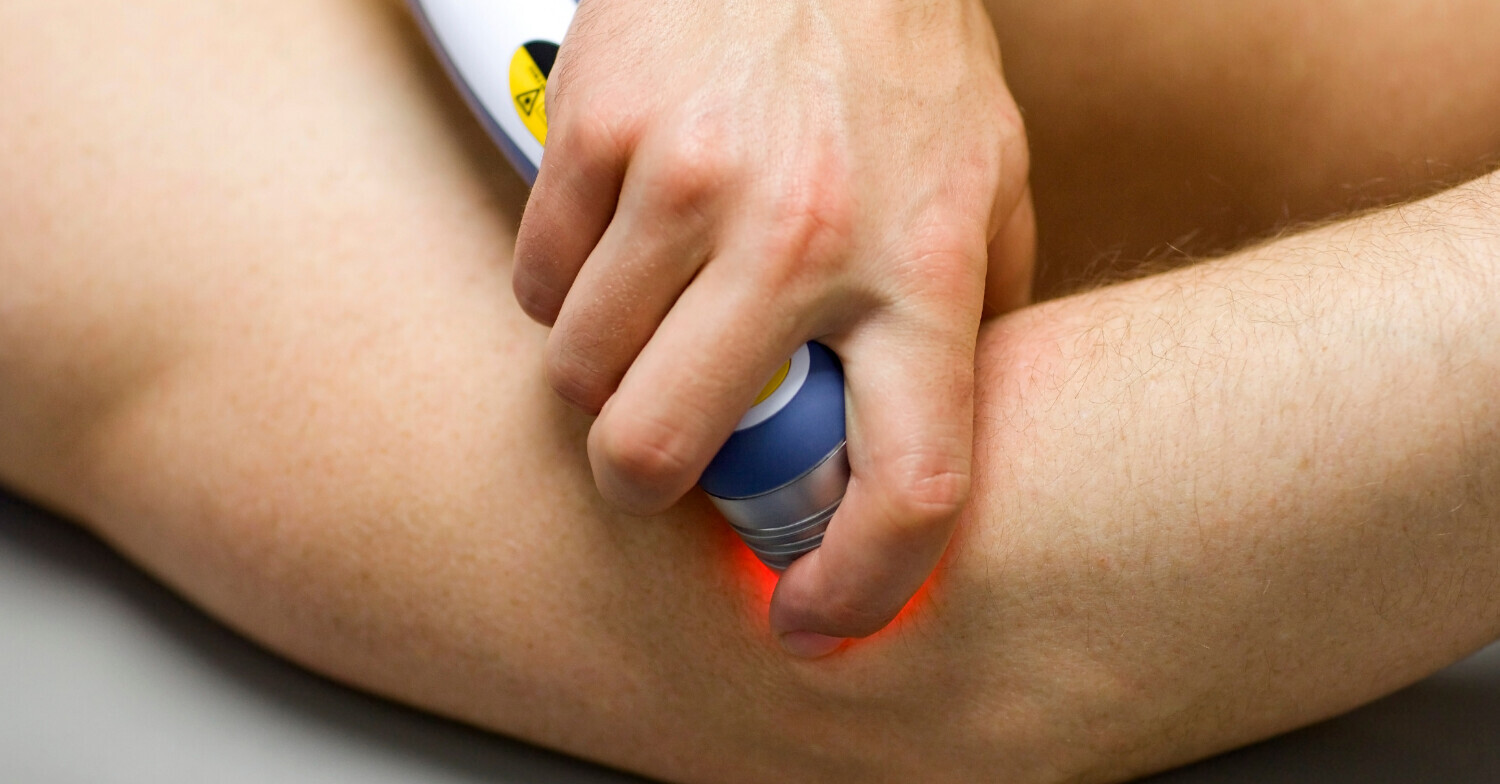
Search for laser therapy near you, and you'll notice a lot of providers leading with "Class 4" as though it's automatically the superior option — bigger number, better technology, right?
Not exactly. The class system for therapeutic lasers is an FDA power classification, not a quality ranking. It tells you how much energy the device outputs, not how effective it is for a given condition, or how much independent research backs its specific clinical use. Understanding what the classes actually mean is the difference between choosing a laser therapy because of a specification and choosing one because it's backed by research relevant to your condition.
What the FDA Laser Classes Actually Mean
Therapeutic lasers are classified by the FDA based primarily on power output and the resulting safety profile:
Class 2 lasers are low-power devices, generally under 1 milliwatt to a few milliwatts of continuous output, that work through photobiomodulation — stimulating cellular activity without producing heat in the tissue. They're used at the surface level, applied directly to or near the area of concern, in relatively short treatment sessions.
Class 4 lasers are high-power devices, often hundreds of milliwatts to several watts of output, that can produce measurable heat in tissue at higher settings. They're designed to treat deeper structures and are frequently marketed on their ability to penetrate further into tissue in a shorter session.
Neither of these facts — power output or tissue penetration — is the same as "more effective" or "better researched." They're different tools built on different mechanisms, and the appropriate choice depends on the condition being treated and the specific research behind the device being used.
Why Breathe Uses the Erchonia EVRL — a Class 2 Device
At Breathe, we use the Erchonia EVRL, a Class 2 low-level laser. This isn't a budget alternative to Class 4 — it's a deliberate choice based on the research base behind the specific device.
Erchonia has built its entire product line around Class 2 technology and holds more FDA clearances backed by double-blind, placebo-controlled clinical trials than any other laser therapy manufacturer. This matters because a lot of laser therapy marketing — across both classes — cites general laser research rather than research on the specific device being used on you. A study on a different manufacturer's Class 4 device doesn't tell you anything about whether the Class 2 device at a different clinic (or the Class 4 device at another) will produce the same result, because wavelength, pulse pattern, and power delivery all vary meaningfully between devices even within the same class.
The EVRL specifically has published research behind its use for musculoskeletal pain reduction and inflammatory modulation — the applications most relevant to the chronic pain and soft tissue conditions we see most often in practice.
Why Lower Power Isn't a Disadvantage Here
The photobiomodulation mechanism that low-level laser depends on — the stimulation of mitochondrial activity in cells — doesn't require high power to occur. In fact, research on photobiomodulation has found that this cellular response follows a biphasic dose curve: there's an effective range of energy delivery, and exceeding it doesn't produce more benefit; it can actually reduce the therapeutic effect. This is part of why Class 2 devices with well-researched protocols can produce meaningful results without the higher power output that Class 4 marketing emphasizes.
The tradeoff runs the other direction too, in fairness: Class 4 devices can treat larger areas faster and are sometimes preferred for deeper structures where minimizing session time matters. That's a legitimate consideration for some clinical settings. It's just not the same thing as "automatically more effective" — and for the conditions we most commonly address with laser at Breathe, the published research behind the Class 2 Erchonia EVRL is the more directly relevant evidence base.
What This Means for You as a Patient
If you're comparing laser therapy providers, the useful question isn't "what class is the laser" — it's "what specific device is this, and what does the published research on that device actually show for my condition." A provider who can answer that specifically is working from evidence. A provider who can only tell you the class and the wattage is working from a spec sheet.
At Breathe, we can walk you through exactly what the research says the Erchonia EVRL does, doesn't do, and is best suited for — as part of a broader care plan that also addresses the joint mechanics and movement patterns that are usually part of why an injury became chronic in the first place.
If you're dealing with a stubborn injury and want a straight answer about whether laser therapy is a fit, book a first visit at Breathe Chiropractic in Phoenix.
Dr. Carla Freeman, DC | Breathe Chiropractic | Phoenix AZ | (602) 254-2454




.png)
