
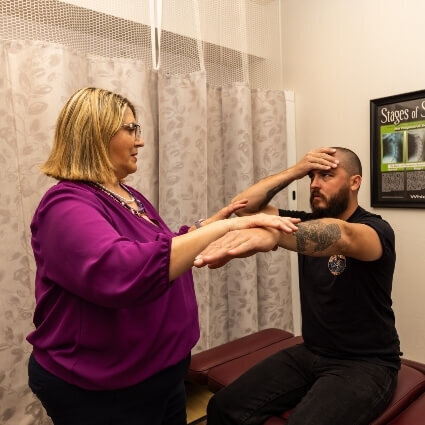
If you've heard about Neuro-Emotional Technique and your first reaction was skepticism, I want to start by saying: that's completely reasonable. The name sounds unusual. The description — that emotional stress gets stored in the body and can be released through a physical protocol — doesn't map onto the way most of us were taught to think about health.
I know this reaction well because I had it too, before I experienced NET myself and before I spent years watching what happens when we apply it clinically.
But skepticism deserves a real answer, not just a testimonial. So let's look at what the research actually shows.
What Is NET, and Why Does It Need Research?
Neuro-Emotional Technique is a mind-body methodology that identifies stress patterns stored in the nervous system — physiological imprints left by past emotional experiences — and uses a specific physical protocol to help the body release them.
The mechanism sits at the intersection of chiropractic, applied kinesiology, and the emerging science of psychoneuroimmunology — the study of how psychological states affect the nervous system, the immune system, and physical health. That intersection is legitimately complex, and it's reasonable to ask whether there's evidence that what NET practitioners observe clinically is actually happening at a measurable physiological level.
There is. And it comes from credible sources.
Study 1: NET Changes Brain Physiology in Traumatic Stress Patients
The most compelling research on NET's neurological effects comes from Thomas Jefferson University — one of the leading integrative medicine research institutions in the country.
Researchers there studied 23 cancer patients who had experienced distressing cancer-related events significant enough to cause traumatic stress symptoms. Patients were divided into two groups: those who received NET treatment, and a control group placed on a waitlist.
Before and after the study period, all patients underwent functional MRI (fMRI) scanning while listening to the story of their distressing experience — to measure how their brains were actually responding to that stress memory.
The results were significant. For patients who received NET, the parahippocampus — a brain region that plays a central role in processing and responding to stress — was no longer activated when patients recalled their distressing memory after treatment. In the control group, no such change occurred.
The lead researcher, Dr. Daniel Monti of the Marcus Institute of Integrative Health at Thomas Jefferson University, described the findings this way: in just four to five brief sessions, patients who received NET reported significantly less distress, their overall emotional state improved meaningfully, and the way their brains responded to stress cues normalized.
This isn't a patient survey or a clinical impression. It's fMRI data showing measurable, visible changes in brain activity following NET treatment, published in a peer-reviewed journal and accessible on PubMed.
Study 2: NET Reduces Chronic Low Back Pain and Inflammatory Markers Simultaneously
The second major study is particularly relevant because it addresses something that almost no other chiropractic research does: the relationship between emotional stress, inflammation, and chronic physical pain — all three at once.
Funded by the ONE Research Foundation and published in a peer-reviewed journal, this study is the first and only chiropractic randomized controlled trial (RCT) to examine all three dimensions of wellness simultaneously in patients with chronic low back pain: physical, emotional, and chemical.
Researchers measured industry-standard outcome measures alongside psychoneuroimmunological blood markers — specifically C-reactive protein (CRP), tumor necrosis factor-alpha (TNF-alpha), and interleukins 1, 6, and 10. These are objective, measurable indicators of inflammation and immune function in the body.
The results across all three dimensions were clinically and statistically significant at baseline, one month, three months, and six months following treatment. NET produced meaningful, sustained declines in all physiological pain and disability markers and improvements in quality-of-life indicators — and it did so not just at the symptom level but at the level of measurable inflammatory biology.
In practical terms: NET didn't just make people feel better. Their bodies showed measurable changes in the inflammatory markers that drive chronic pain.
What This Means for the "Is It Legitimate?" Question
The honest answer is that NET is not as extensively studied as pharmaceutical interventions or even some conventional physical therapies. The research base is still relatively small compared to those fields.
But what exists is meaningful. Two published studies — one with fMRI data showing neurological changes, one with blood marker data showing inflammatory changes — were conducted by researchers at credible institutions, using rigorous methodologies, on populations with real clinical presentations.
For a mind-body modality that addresses something as complex as the intersection of emotional stress and physical health, that's a solid evidentiary foundation. It's also worth noting that the research in this area is growing — the ONE Research Foundation is currently funding ongoing studies, including a pelvic pain study that continues to build the evidence base.
The Clinical Picture at Breathe
Beyond the published research, here's what I observe in practice.
NET consistently helps patients whose physical symptoms don't respond fully to structural care alone. Patients with chronic pain that worsens predictably under stress. Patients who notice physical tension patterns tied to specific relationships, memories, or environments. Patients who have done everything right — the adjustments, the exercises, the sleep hygiene, the supplements — and still feel like something is blocking their body from fully healing.
Those patients often respond to NET in ways that structural care alone can't explain. Their nervous system has been holding a pattern that the adjustment can't reach directly — and when that pattern releases, the physical changes that follow can be significant and rapid.
I've been certified in NET since 2017. I didn't become certified because I was convinced by a sales pitch. I became certified because I had experienced what NET could do — first in my own body — and I needed to understand why it worked well enough to offer it to my patients responsibly.
A Note on What NET Is Not
NET is not therapy. It's not a replacement for mental health care, and I don't use it as one. It doesn't require you to relive difficult experiences or process memories verbally. If you're working with a therapist, NET can complement that work — addressing the physical and neurological layer that talk-based approaches don't reach directly.
It also doesn't work for everyone, and I won't tell you otherwise. But for patients whose presentation suggests a significant stored stress component, it's one of the most powerful tools I have.
Want to Experience It?
If you're curious about whether NET might be relevant for what you're experiencing, the best first step is a new patient consultation. I assess whether a patient is likely to respond to NET based on their history and presentation — and I'll tell you honestly if I think it's indicated for your situation.
You can also book a free 15-minute case review if you'd like to talk through your situation first.
[Book Your First Visit] [Book Free Case Review]
Dr. Carla Freeman, DC is the founder of Breathe Chiropractic in Phoenix, AZ. She holds NET certification through the NET Institute and has been practicing Neuro-Emotional Technique since 2017. Breathe Chiropractic offers chiropractic care, acupuncture, massage therapy, and integrative techniques for nervous system-focused care.
References:
- Monti DA, et al. Neuro emotional technique effects on brain physiology in cancer patients with traumatic stress symptoms: preliminary findings. Journal of Cancer Survivorship. 2017. PubMed
- Bablis P, Pollard H, Rosner AL. Stress reduction via neuro-emotional technique to achieve the simultaneous resolution of chronic low back pain with multiple inflammatory and biobehavioural indicators: A randomized, double-blinded, placebo-controlled trial. Journal of Integrative Medicine. 2022. PubMed
- ONE Research Foundation. oneresearchfoundation.org




.png)
