
The Laser Myth That's Keeping People From Real Relief
Have you ever avoided a treatment that could genuinely help you, just because the word "laser" made you picture something hot, intense, or risky?
If you've ruled out laser therapy for your neck or shoulder pain because you're worried about burns or skin damage, you're not alone — and you're also working from a myth that doesn't hold up once you know what's actually going on.
The myth: All laser treatments carry the same risk of burning or overheating your skin.
The truth: Not all lasers are the same, and the device we use for pain relief at Breathe is specifically designed to avoid that risk entirely.
Understanding this distinction might be the difference between staying stuck with unaddressed neck and shoulder pain and getting real relief. Let's break down why this myth is so common, and what's actually true.
Why This Myth Is So Easy to Believe
Honestly, it's not your fault. "Laser" is a broad word covering a huge range of technologies — everything from surgical lasers to cosmetic skin-resurfacing lasers to high-powered "Class IV" therapeutic lasers that genuinely do produce heat in the tissue. If your only reference points for "laser" are the ones that involve heat, discomfort, or visible marks, it's completely reasonable to assume any laser treatment carries that same risk. Most people have simply never had the different categories explained to them.
How This Myth Holds People Back
We see this hesitation regularly: someone dealing with ongoing neck or shoulder pain hears "laser therapy" and rules it out immediately, without ever learning that the specific device matters enormously. That means people who could genuinely benefit from a safe, well-studied, non-medication option are avoiding it based on an assumption that doesn't apply to what we actually use.
That's a real loss — especially for anyone who's already wary of medication-based approaches to pain and would otherwise be a good candidate for this kind of care.
What's Actually True
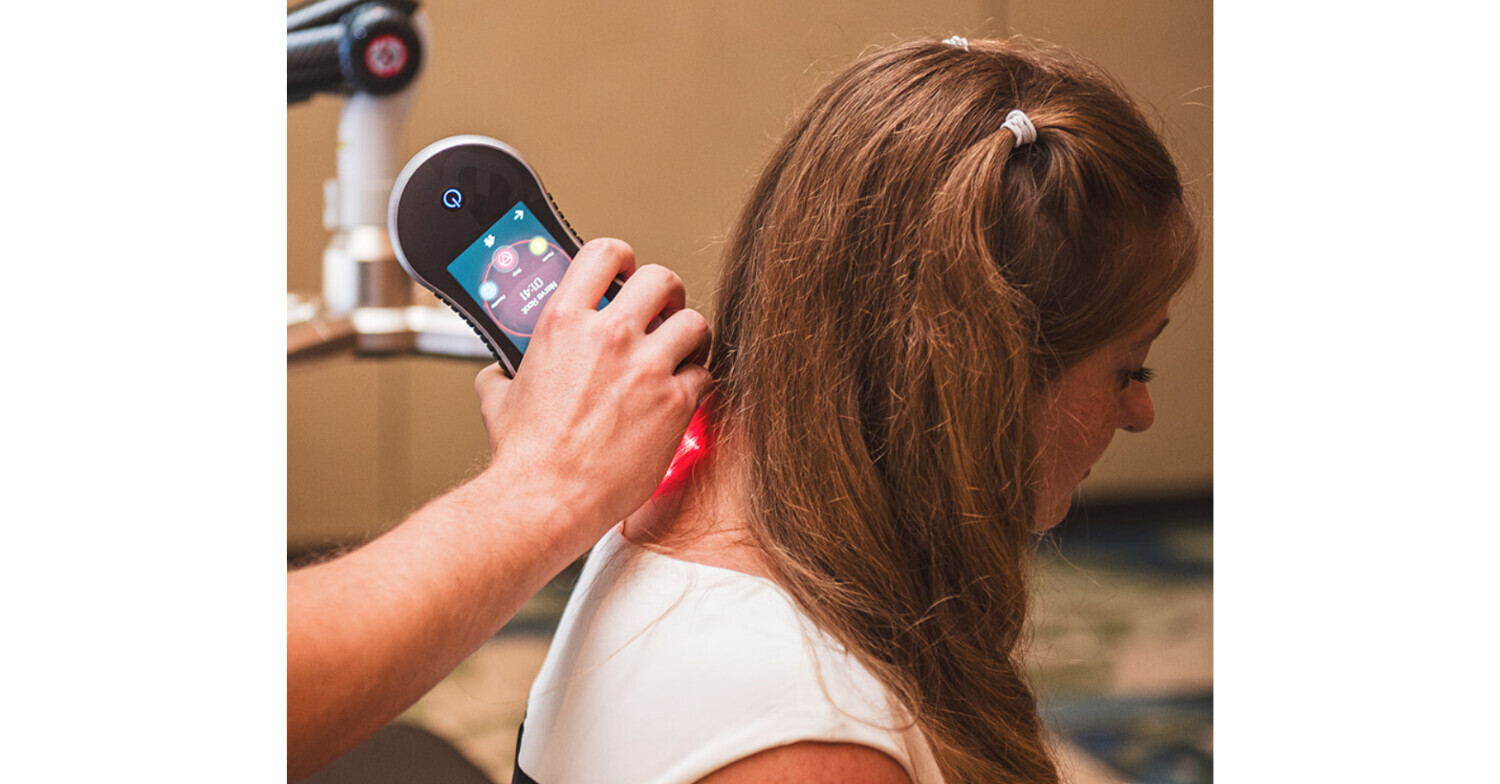
At Breathe, we use the Erchonia EVRL, a non-thermal, Class 2 laser. That classification matters: Class 2 lasers are a genuinely lower-power category than the "Class IV" lasers capable of producing heat. The EVRL doesn't generate heat in the treated tissue at all — there's no burning risk, full stop.
It's also not an experimental or unproven device. The EVRL's red diode is FDA-cleared for adjunctive, temporary relief of minor chronic neck and shoulder pain of musculoskeletal origin. As an interesting bonus, its violet diode is separately FDA-cleared for a completely different use — treating moderate inflammatory acne vulgaris. Two legitimate, specific, evidence-backed uses from the same safe, non-thermal device.
What to Do With This Information
If you've been avoiding laser therapy out of a general worry about burns or overheating, it's worth asking your provider directly what type of device they use before ruling it out. Not all "laser therapy" is created equal, and the difference between a Class 2 and a Class IV device is exactly the kind of detail that should inform your decision, not a vague impression from unrelated experiences.
If your neck or shoulder pain has been nagging at you and you've been hesitant about laser therapy specifically because of safety concerns, that's worth revisiting with accurate information in hand.
Ready to Learn More?
We'd love to walk you through exactly what the Erchonia EVRL is, what it's cleared for, and whether it's a good fit for your neck or shoulder pain — without any of the risk you may have been picturing.



.png)
